- Planet Compliance
- Posts
- The Corporate Responsibility Gap in Tech Ethics
The Corporate Responsibility Gap in Tech Ethics

📝Editor’s Note
Across industries, one issue has become clear this week: companies are adopting advanced technologies faster than they can govern them. Boards are asking tougher questions, regulators are moving slowly, and compliance teams are left to bridge the gap. The real challenge is no longer awareness of risk, but ownership of responsibility.

📊Featured Analysis
The Corporate Responsibility Gap in Tech Ethics
A growing concern in compliance is the gap between stated ethical principles and actual corporate behavior. This discussion on technoethics highlights how many organizations promote responsible AI and ethical standards, yet fail to embed them into decision-making processes. Leadership often treats ethics as a communication tool rather than an operational requirement.
This gap becomes more visible as AI adoption increases. Companies deploy advanced systems without clear accountability, leaving compliance teams to manage risks after the fact. The issue is not a lack of frameworks, but weak execution and unclear ownership at the leadership level. Research also shows that many compliance programs struggle to integrate technology effectively, even as expectations rise.
The result is a disconnect where ethical commitments exist on paper but fail in practice. For compliance leaders, the focus must shift from policy creation to enforcement, monitoring, and measurable accountability tied to business outcomes.
Key takeaway: Ethics in technology must move from statements to systems, with clear accountability at the leadership level.
✅ Best Practice Spotlight
Improving Compliance in an AI-Driven Environment
Establish clear accountability for AI systems at the leadership and board level
Maintain an inventory of all AI models, including purpose, data sources, and risk level
Conduct regular bias and fairness testing to detect unintended outcomes
Align AI use with existing regulations such as General Data Protection Regulation and emerging AI laws
Implement human oversight for high-risk decisions made by AI systems
Document model decisions and maintain audit trails for regulatory review
Review third-party AI tools with the same rigor as internal systems.
🛠️ Tool of the Week
Asset Management Software
Asset management software helps organizations track, monitor, and control both physical and digital assets across their lifecycle. It supports compliance by improving visibility, maintaining audit trails, and reducing the risk of loss or misuse.
Key Features
🌟 Leader Spotlight
PMGC Holdings
PMGC Holdings Inc. has advanced its manufacturing strategy through its subsidiary, Silicon Valley Manufacturing (SVM), by securing compliance with the International Traffic in Arms Regulations. This registration, overseen by the Directorate of Defense Trade Controls, allows SVM to participate in defense and aerospace programs that require strict export control standards. The move positions SVM as a qualified supplier for Tier 1 defense contractors and aerospace OEMs. It also supports PMGC’s broader plan to expand into high-value, defense-related manufacturing, where compliance acts as a key entry barrier and competitive advantage.
📚 Recommended Reading
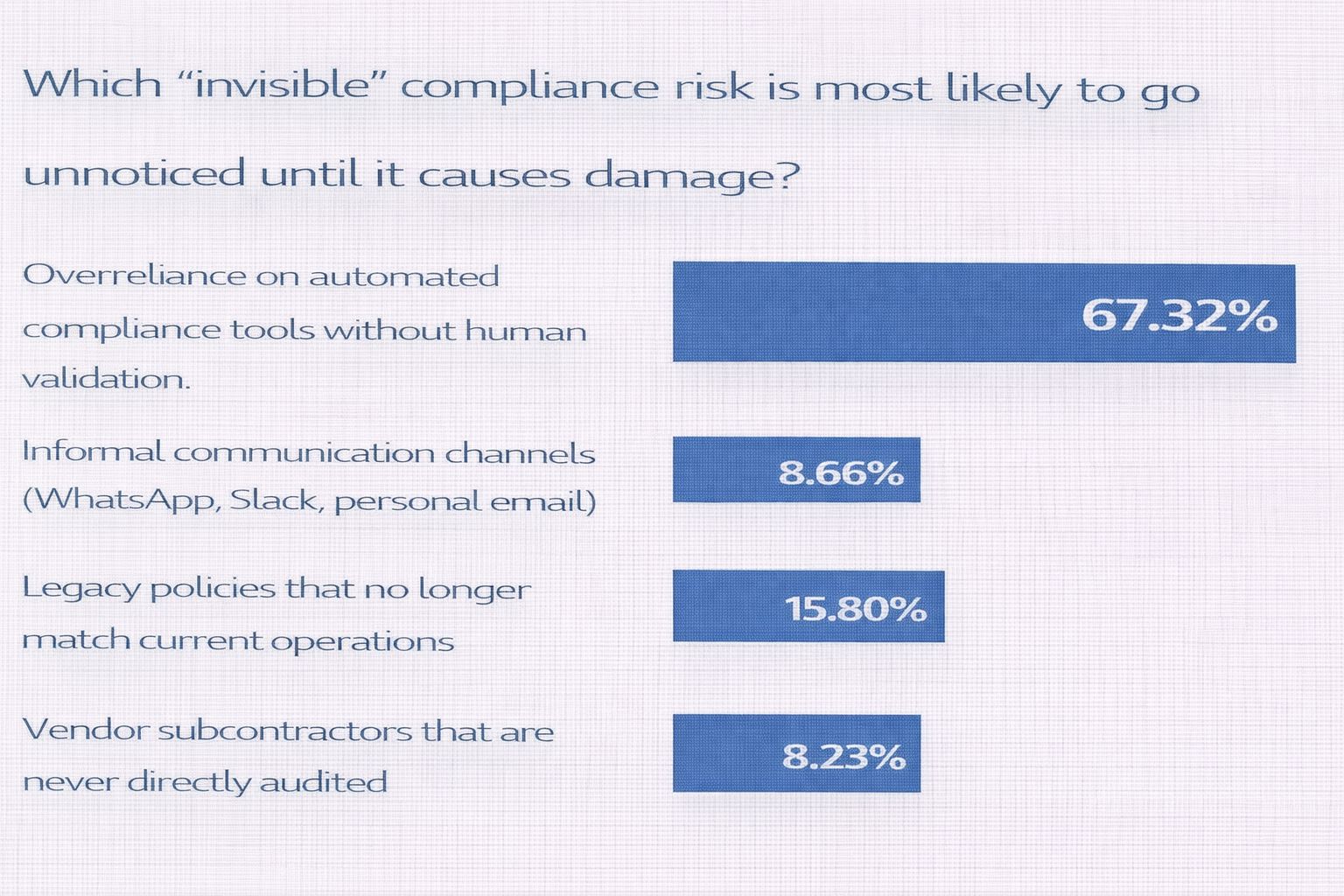
🗳️ Your Compliance Take